Brand identity
Brand identity design for consumer brands
A name, a mark and a system that a consumer brand can put on a pack, a shelf, a campaign and a product page without losing its voice.
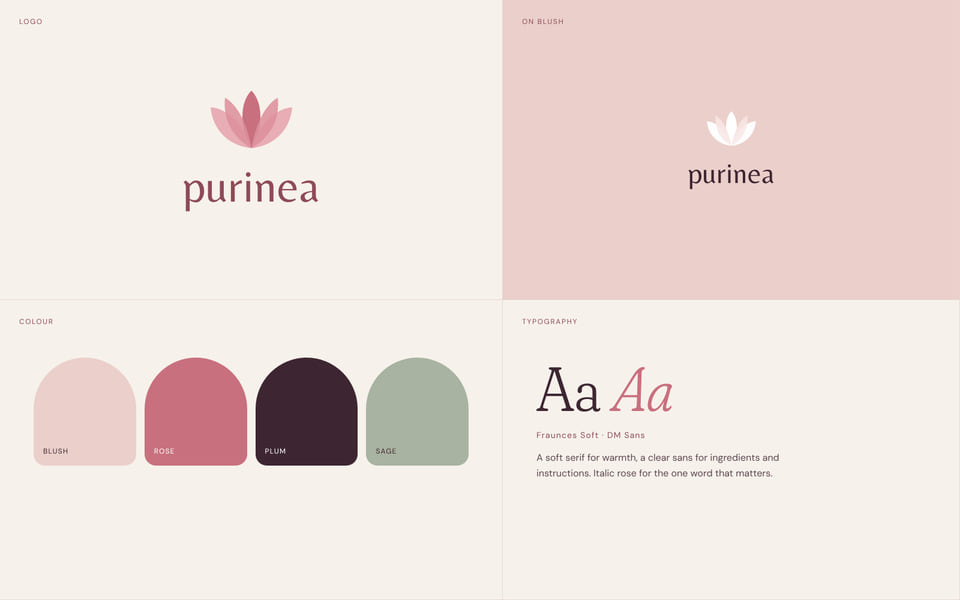
What the brand identity project covers.
Agreed in writing before design starts, so you know what is in the project and what is not.
- Naming, when the brand needs one
Name routes checked for meaning and tone before any mark is drawn.
- Symbol and logotype
The mark and the name, drawn to work at favicon size and on a billboard.
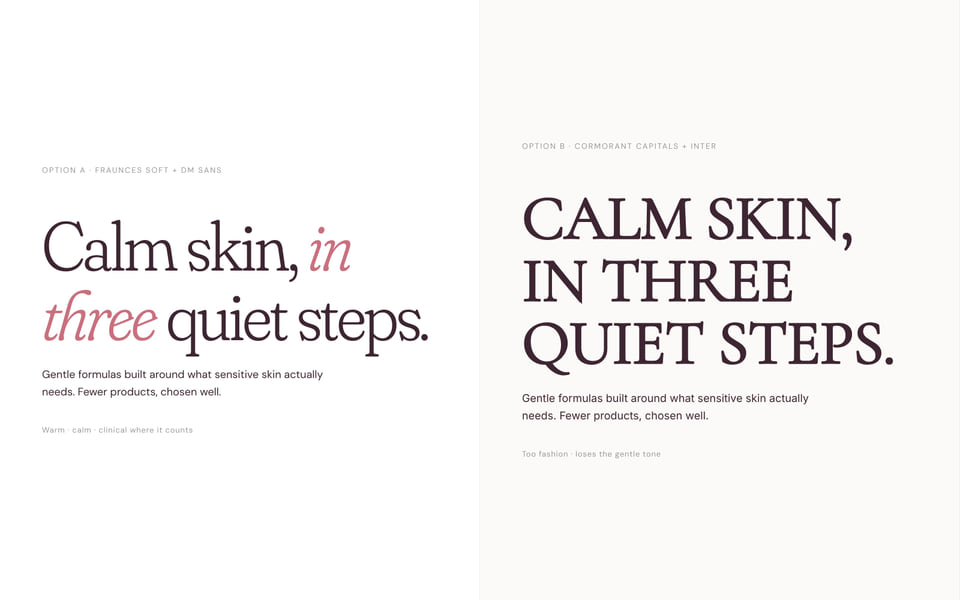
- Typography and colour
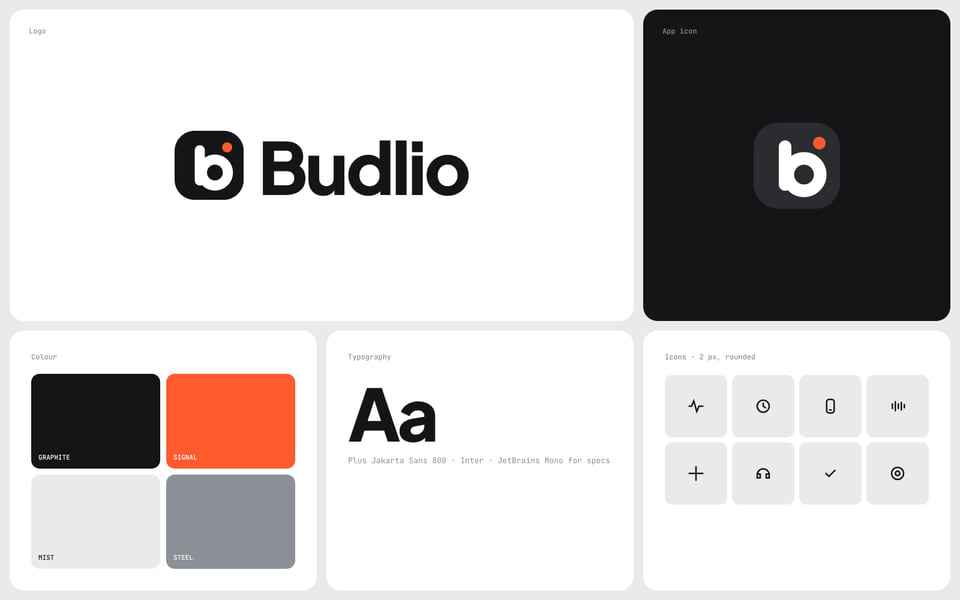
Typefaces with clear roles for headlines, text and labels, and a palette that behaves the same way on screen, on paper and on pack.
- Packaging and key applications
The first pieces customers will touch: labels, boxes, bags, social templates.
- Guidelines
The rules for using the identity, written so a printer, a freelancer or your own team can follow them.
What you receive at the end.
What you receive at the end of the project.
- Logo files for screen and print, in every colour version
- Colour values for screen, print and packaging
- Typeface choices, with licence notes
- Designed key applications, ready for production
- Brand guidelines document
How the project runs.
Four steps, each with something you can approve before the next one starts. The schedule for each is written into the proposal.
Understand
Your product, your customers and the shelf or feed you compete on.
An agreed brief.
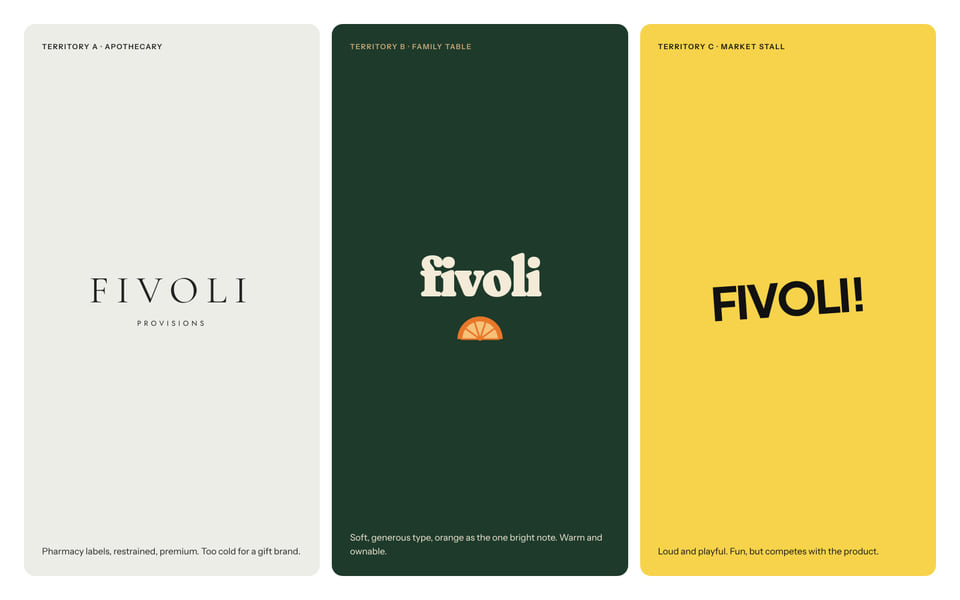
Explore routes
Two or three routes, each with a note on why it works or not. You choose one.
One chosen route, in writing.
Build the system
The mark, type, colour and the first applications, tested on real formats.
The identity, applied.
Hand over
Final files, guidelines and a walkthrough for whoever uses them next.
Files, guidelines and a handover.
Several routes, one goes forward.
You see the routes that were explored, each with a note on why it works or not, before one is developed.
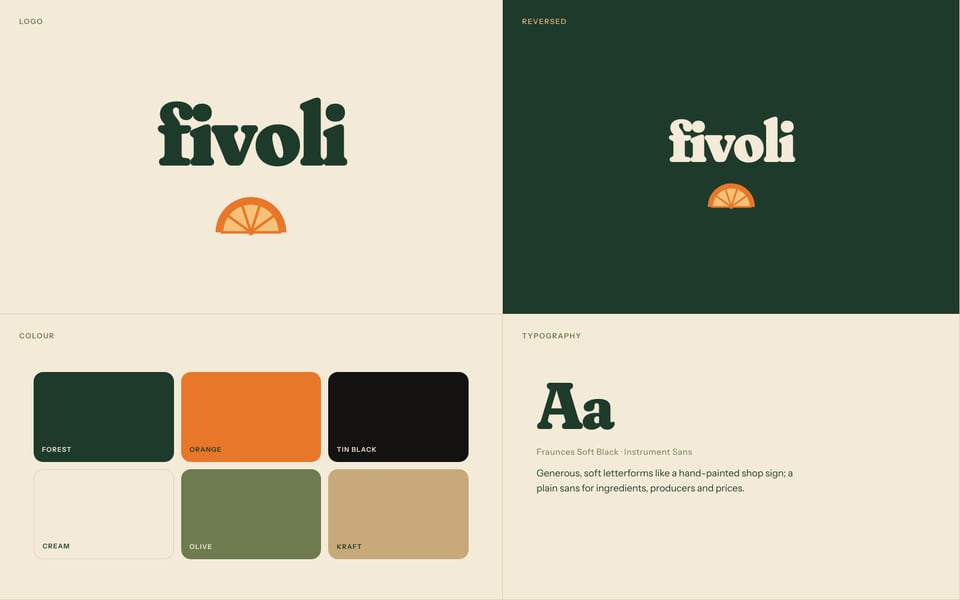
Related work.
Self-initiated studio concepts, each with its identity, applications and website.
Common questions
About brand identity
What is the difference between a logo and a brand identity?
A logo is one mark. An identity is the system around it: type, colour, layout rules and the applications that show how the brand behaves in real use.
Can you refresh the identity we already have?
Yes. Sometimes the name and mark stay and the system around them changes. The first conversation decides whether it is a refresh or a rebuild.
Do you design packaging?
Packaging is part of the key applications when the brand sells a physical product.
How many routes do we see?
Usually two or three, each with a written note on why it works or not. One goes forward.
How long does an identity take?
The schedule is written into the proposal before anything starts.
Can you start from the brand we already have?
Yes. We start where you are: a brand to create, a brand to bring up to date, or a website that no longer represents you.
Also as one project
Ecommerce branding, planned with this one.
Branding built for a brand that sells online: the identity and the store designed together, so the mark, the type and the voice are already working on the product page, the cart and the parcel.
Tell us about the brand you are building.
A short request, a call to agree what it needs, then a proposal with scope and schedule in writing.
Scope and schedule in writing before design starts.
- 01You tell us about the project in a short request.
- 02A short call to agree what the project needs.
- 03A proposal with scope and schedule in writing.