Ecommerce website design
Ecommerce website design for consumer brands
An online store designed around how your customers shop: collections they understand, product pages that answer the questions that stop a purchase, and a system that keeps every new page on brand.

What the ecommerce website design project covers.
Agreed in writing before design starts, so you know what is in the project and what is not.
- Store structure
Navigation, collections and filters planned around the way your customers choose, agreed in writing before design starts.
- Product pages
Gallery, variants, ingredients or specs, delivery and returns, in the order a buyer needs them.
- Home, collection and campaign pages
The templates that bring people in and move them to a product.
- Cart and checkout path
The steps your platform lets us style, designed to remove doubt rather than add steps.
- Phone first
Every template is designed at phone width first, then desktop.
- Web design system
Components and rules, so new products and campaigns keep the same hierarchy.
What you receive at the end.
What you receive at the end of the project.
- Store map: navigation, collections and filters
- Designed templates for home, collection, product, content and cart, on phone and desktop
- Component library with states and rules
- Assets prepared for the build
- A handover session with whoever builds and runs the store
How the project runs.
Four steps, each with something you can approve before the next one starts. The schedule for each is written into the proposal.
Understand
Your catalogue, your customers and the questions that stop them buying today.
An agreed brief and a list of what the store must solve.
Structure
The store map and the templates it needs, before any page is drawn.
The store map, in writing.
Design
The templates on the agreed structure, phone first, in your identity.
Designed templates and the component library.
Prepare the build
Files, rules and a walkthrough for whoever builds the store.
A build-ready handover.
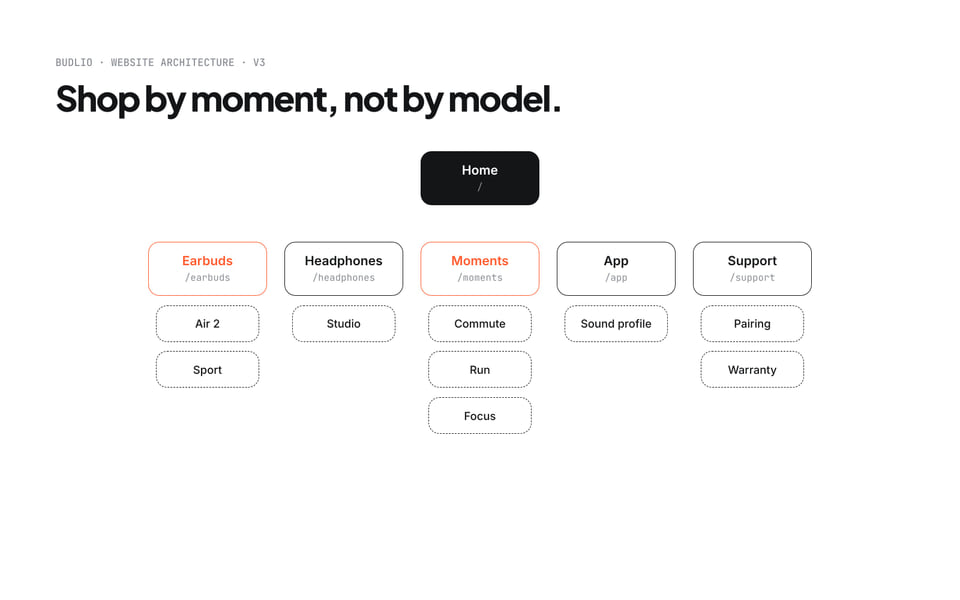
Structure first, then the page.
The store map is agreed in writing before any template is drawn. The design follows it.
Related work.
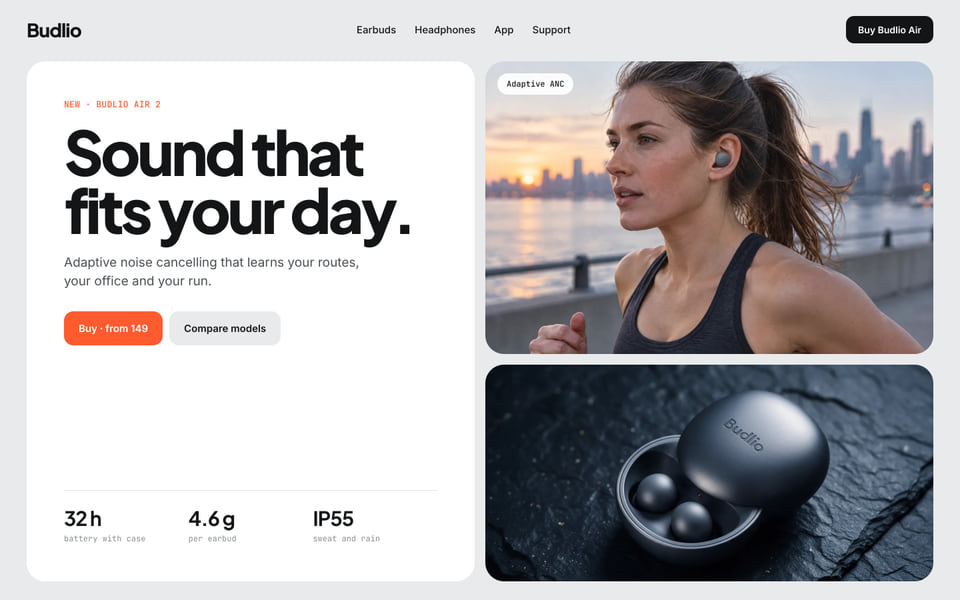
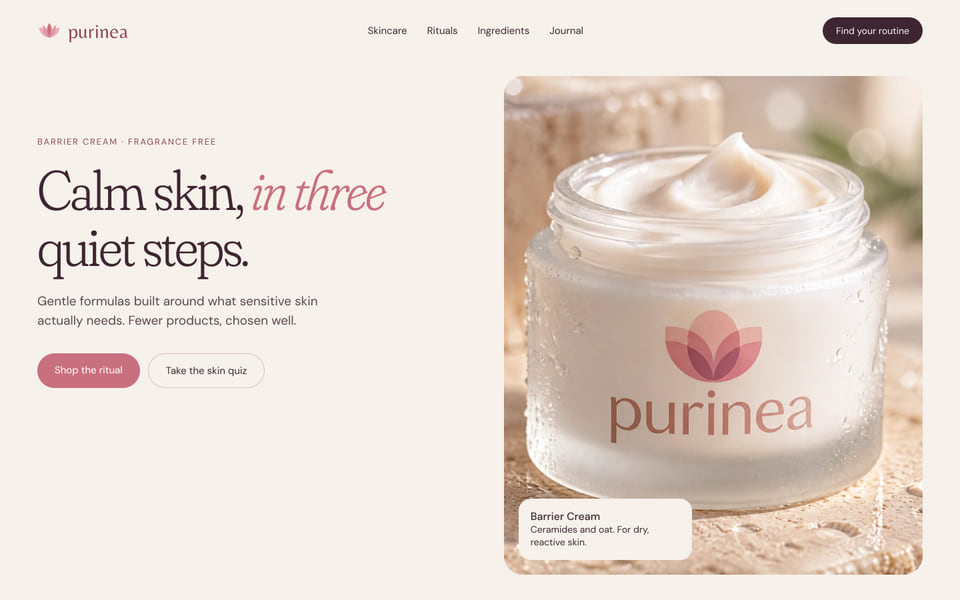
Self-initiated studio concepts, each with its identity, applications and website.
Common questions
About ecommerce website design
Which platform do you design for?
The templates are designed for the platform the store runs on.
Do you build the store or only design it?
Design is always included. Who builds it is agreed in the proposal.
Can you redesign our store without changing the brand?
Yes. If the identity stays, the store carries it as it is. If it needs work, the brand and the store can be planned as one project.
Will we keep our search rankings after a redesign?
The store map includes your current addresses and where each one goes, so existing pages keep their URL or redirect to the right new one.
Do you write the product copy?
We design the page so the copy has a place to do its job.
How long does a store take?
The schedule is written into the proposal before anything starts.
Also as one project
Brand identity, planned with this one.
A name, a mark and a system that a consumer brand can put on a pack, a shelf, a campaign and a product page without losing its voice.
Tell us about the store you need.
A short request, a call to agree what the store needs, then a proposal with scope and schedule in writing.
Scope and schedule in writing before design starts.
- 01You tell us about the project in a short request.
- 02A short call to agree what the project needs.
- 03A proposal with scope and schedule in writing.