Packaging design
Packaging design agency for consumer brands
Packaging design for consumer brands sold on a shelf and online. We start from a written requirements sheet, build a label system that fixes what never moves and what changes per flavor or variant, test the front at shelf distance and at product-card size, then prepare artwork on your manufacturer's dielines.
What the packaging design project covers.
Agreed in writing before design starts, so you know what is in the project and what is not.
- Pack requirements sheet
Format, material, channels, range and first read written on one sheet before any design, with the lines your suppliers must confirm marked as theirs.
- Front hierarchy
What the buyer reads first, second and third: brand, product type, variant and the one claim worth the space.
- Label system
A written rule for what stays on every pack and what changes per flavor, shade or size, so the range grows without redrawing.
- Shelf and thumbnail test
Each direction is checked at arm's length on a shelf and at the size of an online product card.
- Parcel and gift moments
Shipping boxes, mailers and gift packs designed as part of the same system when the brand sells online.
- Print-ready artwork
Files prepared on the dielines your manufacturer supplies, with the print method and colors confirmed with your printer.
From requirements sheet to label system
Packaging design starts with what the pack must do and what your suppliers must confirm, and ends with a rule the range can follow without us.
Start with the pack requirements sheet
- Product and format. Jar, pouch, carton, tube or bottle, and the sizes in the range: ______
- Material and finish. What the pack is made of and any coating or texture, confirmed with the supplier: ______
- Dielines. Who supplies them and in which file format: ______
- Sales channels. Shop shelf, deli counter, online product card, parcel, gift: ______
- First read. The one thing a buyer must understand before picking it up: ______
- Range. Variants now, and the kinds of variants you expect to add: ______
- Print method and colors. Confirmed with the printer before artwork starts: ______
- Information the pack must carry. Confirmed by your manufacturer and supplied by you; we reserve the space: ______
Who fills in which line of the sheet?
You know the product, the channels and the range plan, so those lines come from you, often in the same call as the brand discovery questions. Your manufacturer and printer own the format, material, dielines, print method and the information the pack must carry. We write the first read and the hierarchy, because those are design decisions.
Marking each line with its owner matters more than it looks. Most late changes on a pack come from a supplier line that nobody confirmed, so the sheet goes to your suppliers before the first direction is drawn, and artwork only starts when their lines are filled.
What changes per flavor and what never moves
A label system is a short written rule: these elements are the same on every pack, these change per variant, and this is how a new variant is made. Without it, every new flavor becomes a small redesign, and after a few the range stops looking like one family.
The table below sets out the elements we decide in every range, with the Fivoli studio concept as the illustration. Where the concept does not define an element, the table says so instead of filling the gap.
| Element | Stays or changes | Why | In the Fivoli studio concept |
|---|---|---|---|
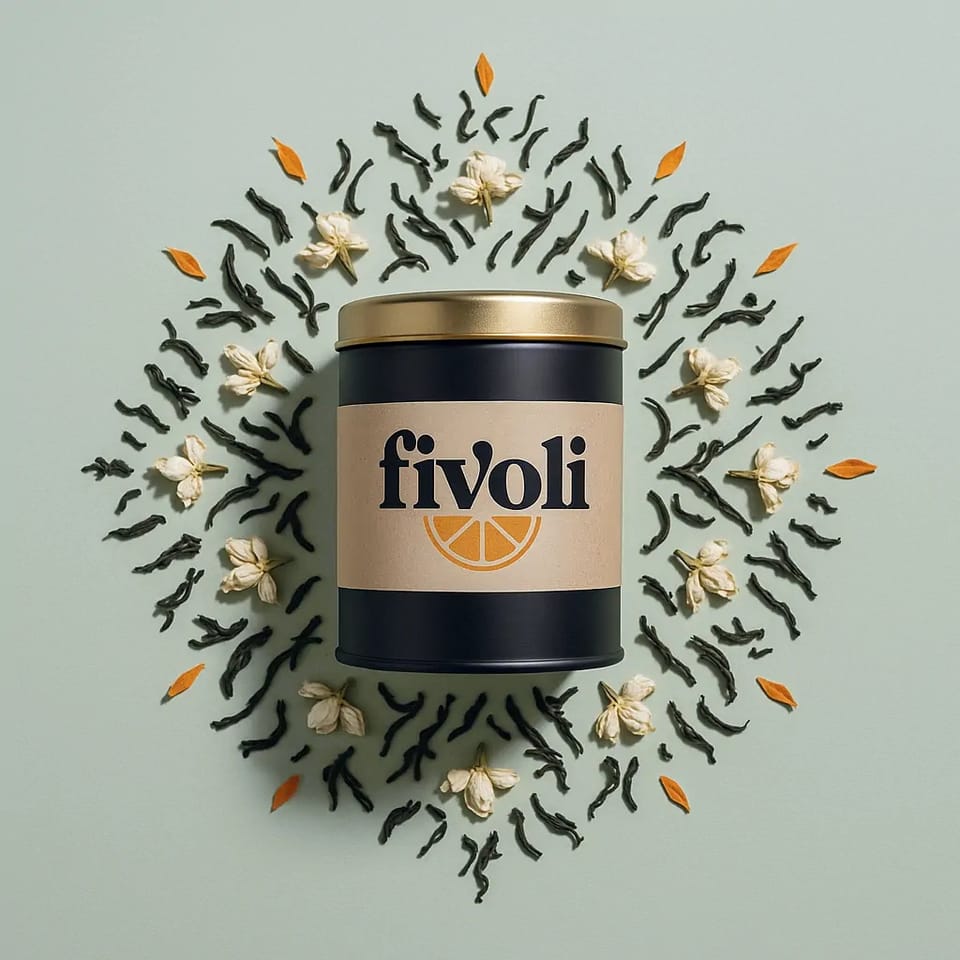
| Wordmark and symbol | Stays | Recognition across the range depends on it. | The same wordmark with one orange slice. |
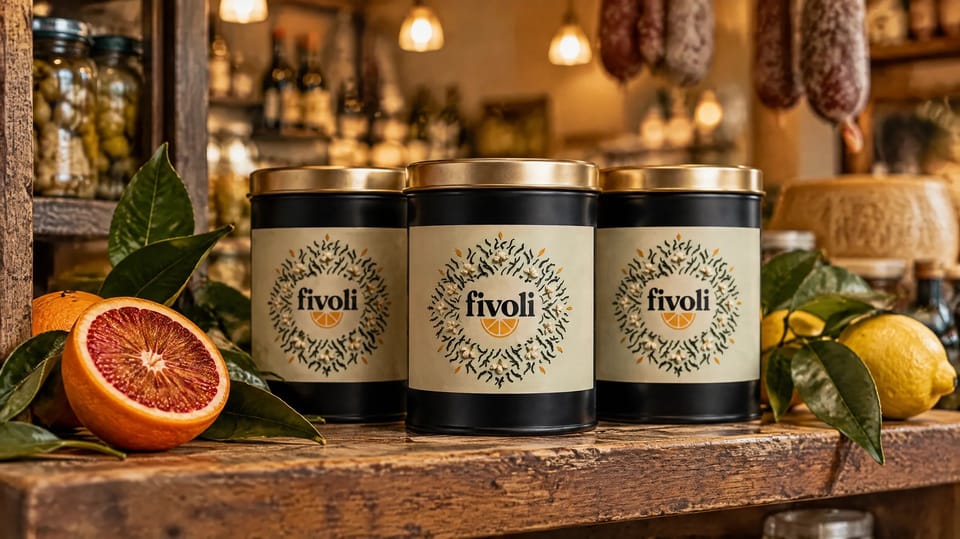
| Main frame or device | Stays | It makes the range read as one family from a distance. | The hand-drawn citrus wreath frames the wordmark on every jar. |
| Typeface roles | Stays | The same voice on every pack, whatever the flavor. | Fraunces Soft Black for display; Instrument Sans for ingredients and producers. |
| Base palette | Stays | It holds the family together on a mixed shelf. | Forest, orange, tin black, cream, olive and kraft. |
| Flavor or variant name | Changes | It is the second thing a buyer looks for. | Per jar, for example blood orange marmalade. |
| Ingredient and producer line | Changes | It is what differs between products. | Set in Instrument Sans on each jar. |
| Variant color cue | Decided per range | Helps find a flavor fast, but too many colors break the family. | Not defined in the concept. |
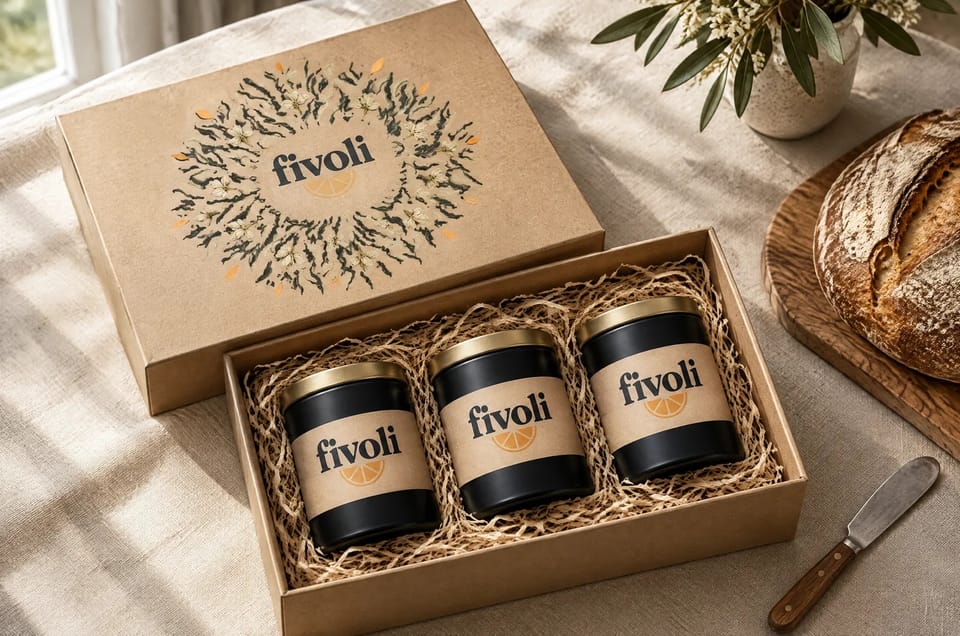
| Gift and multipack format | Stays as a format | One box design holds any combination of variants. | A kraft gift box that holds three jars. |
How we test a front before artwork
Every direction is printed or shown at real size and looked at from arm's length, the distance a shopper scans a shelf from. Then the same front is reduced to the size of a product card in an online store, where most buyers meet it first. A front that only works large fails half its job.
For brands that ship, we also look at the pack inside the parcel and as a gift, because the moment a box is opened is part of the product. That is also where the pack meets the store: the photography and product pages in an e-commerce website should show the same hierarchy the shelf does.
Where packaging sits in the identity
The pack applies the identity; it does not replace it. The mark, the color palette and the typefaces come from the brand identity, and the label system is added to the brand guidelines so the next designer or printer follows the same rule.
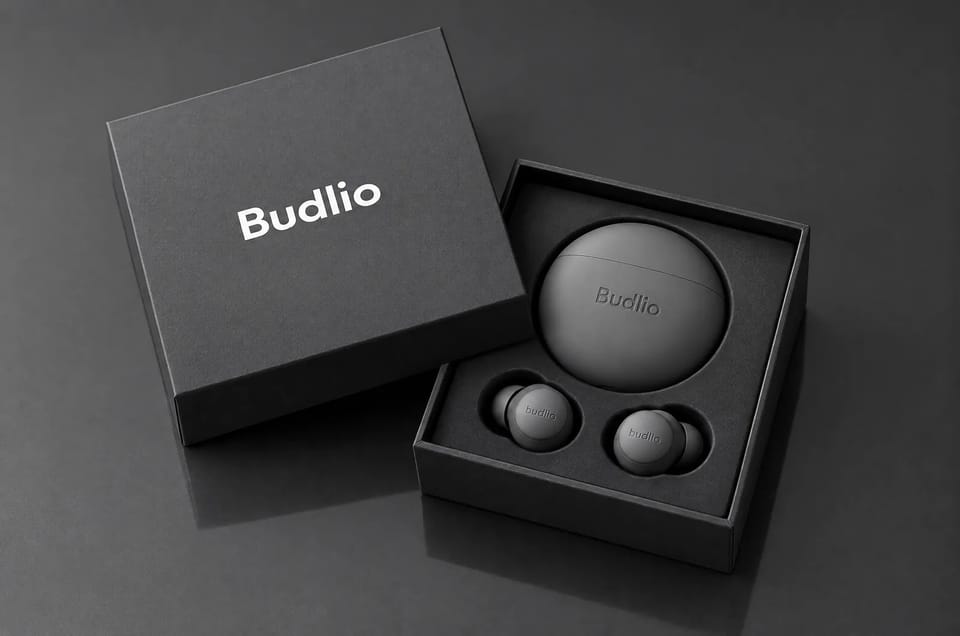
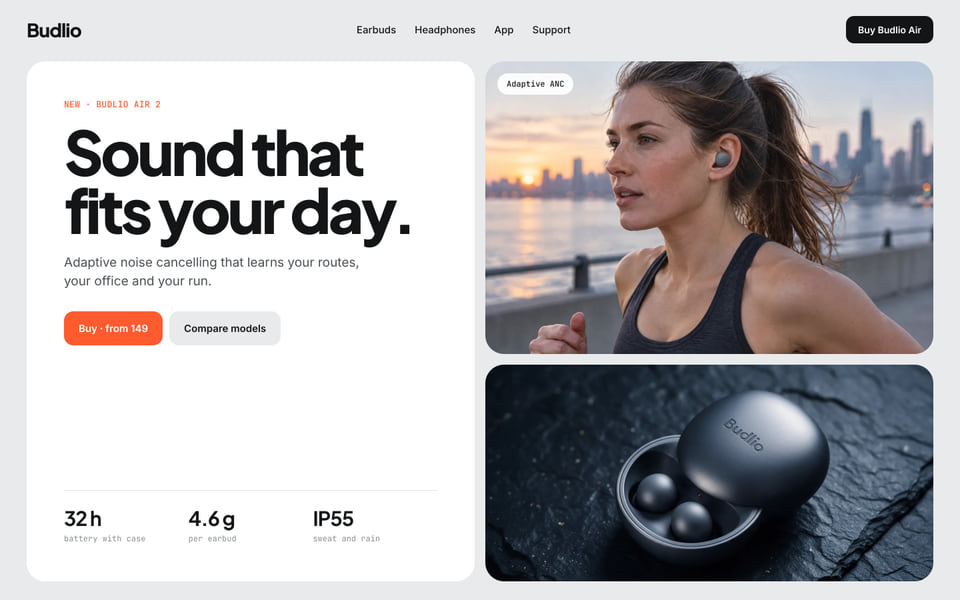
In the Budlio studio concept the box is black, and the mark and one color carry the shelf. In Fivoli the wreath does that work. Both show the same idea: one element strong enough to be recognized before anything is read. For brands whose pack, store and parcel must work as one, see e-commerce branding.
What we leave to your suppliers
We do not engineer structures, produce dielines, buy print or confirm what information a pack must carry. Those stay with the manufacturer, the printer and you, and the requirements sheet names who owns each one.
What we do is make sure the design fits what they confirm: artwork built on their dielines, colors set up for their print method and space reserved for the information they specify.
What you receive at the end.
What you receive at the end of the project.
- The completed pack requirements sheet
- Front and back of pack designed for the hero product
- The label system for the range, written down
- Mockups for presentation and for the online store
- Artwork files prepared on the supplied dielines
How the project runs.
Four steps, each with something you can approve before the next one starts. The schedule for each is written into the proposal.
Requirements
The sheet filled in with you, and the supplier lines sent for confirmation.
The pack requirements sheet.
Directions
Two or three front hierarchies compared at shelf distance and product-card size.
Directions with test notes.
System
The chosen direction applied across the range, with the fixed and variable parts written down.
Designed packs and the label system.
Artwork
Files built on the dielines and checked against the printer's specification.
Print-ready files.
One label, many flavors: the Fivoli studio concept
A self-initiated studio concept, not a client project: the same citrus wreath label across the range, the gift box and the jar at the table.
Related work.
Self-initiated studio concepts, each with its identity, applications and website.

Common questions
About packaging design
What does a packaging design agency do?
It designs the graphics of a pack and the system that lets a range grow, then prepares the files for print. We also test every front at shelf and online sizes before it is finished.
Do you design the box or bottle structure?
We design the graphics on the structure. The structure, its engineering and the dielines come from your manufacturer.
Who decides what information the pack must carry?
Your manufacturer and suppliers confirm it, and you supply the final text. We reserve the space for it and lay it out.
Can you work with packs we already produce?
Yes. We start from the current dielines and decide with you what the label system keeps and what it changes.
Will the pack work for online selling?
Every front is checked at product-card size, and the system covers mailers and gift boxes when you sell online.
Can we add a new flavor later without the studio?
That is the aim of the label system: the fixed and variable parts are written down, so a new variant follows the rule.
Do you arrange printing?
No. We prepare the files and answer the printer's questions; printing is arranged with your supplier.
Do we need a brand identity first?
The pack sits on the identity. If you have one we work from it; if not, the proposal includes the identity work the pack needs.
Also as one project
Brand guidelines, planned with this one.
Brand guidelines are the document that tells your team, your freelancers and your store builder how the brand looks and sounds, with right and wrong examples side by side. We write and design them in the format your brand actually needs: a short style guide, a full brand book or a kit of ready templates.
Tell us what the pack has to do.
A short request, a call to agree the brief, then a proposal with scope and schedule in writing.
Scope and schedule in writing before design starts.
- 01You tell us about the project in a short request.
- 02A short call to agree what the project needs.
- 03A proposal with scope and schedule in writing.