B2B branding
B2B branding for every buyer in the room
B2B branding has to convince more than one person. A purchase often passes through the person who will use it, a manager who owns the budget, a finance check and someone who signs, and each looks for something different. We build identities and websites for B2B companies that sell online, so every role finds its answer.
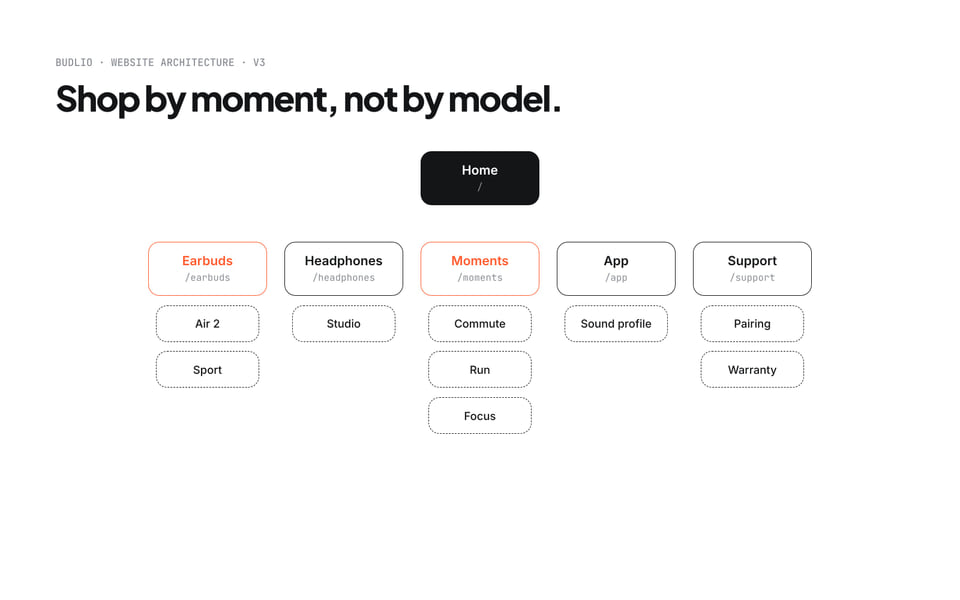
What the b2b branding project covers.
Agreed in writing before design starts, so you know what is in the project and what is not.
- A buying committee map
A working session that lists who takes part in a purchase from you, what question each person asks, and which piece of the brand has to answer it.
- A positioning line and where the proof sits
One sentence on what you do and for whom, and a plan for which evidence goes on which page or document.
- An identity that works in documents
Mark, type and color drawn to hold up in a proposal PDF, a spec sheet, a slide and an email signature, not only on the home page.
- Templates for the pieces that get forwarded
A one-pager, a proposal cover and layout, a spec or product sheet: the files that travel between buyers when you are not in the room.
- A website structure for several readers
A page map arranged so a hands-on user, a manager and a buyer each find their page from the menu, designed in the new identity.
- Guidelines your sales team can follow
Short rules for the people who make decks and documents every week, written so they can follow them without a designer.
What does each buyer need to see from a B2B brand?
A buying committee map that ties each role to the brand piece that answers its question, and what a company website needs when several people read it.
What is a buying committee map?
It is a one-page tool that lists the people who take part in a purchase from you, the question each one asks, and the piece of the brand that answers it. It turns a vague goal like "look more professional" into a list of pages and documents with a job each.
Not every company has every role, and in a small firm one person can hold three of them. The map still helps, because the questions stay the same even when the same person asks all of them. The table below is a starting version; your own map replaces the generic roles with the people who actually buy from you.
| Role in the purchase | The question they ask | Brand piece that answers it | Where they usually meet it |
|---|---|---|---|
| The person who found you | Can I put this company in front of my boss without risk? | A home page line and a one-pager that explain you without them | Search, a referral, a forwarded link |
| The hands-on user | Will this work the way I work? | Product or spec pages with real detail, and documentation in the brand's type and layout | Product pages, a printed spec sheet |
| The manager who owns the budget | What changes for my team, and is it worth the effort? | A clear statement of fit and outcome, with evidence placed next to it | The proposal, a short deck |
| Finance or purchasing | What exactly is included, and is this a real company? | A proposal layout where scope reads clearly, and consistent company details on every document | The proposal PDF, the invoice, the contact page |
| Technical or IT review | Will it fit with what we already have? | A plain technical page or sheet, named the same way as on the rest of the site | A forwarded PDF, a support page |
| The person who signs | Does this company look like it will still be here next year? | A consistent identity across site, documents and email; an about page that says who you are | A glance at the site, the signature on an email |
How do you fill in the map for your own company?
- Last three purchases. Write down who was involved in the last three sales you made, by role, not by name: ______
- First contact. For each role, where they first met you: search, a referral, a trade show, a forwarded file: ______
- The question. The one thing each role needed to know before saying yes. Ask your salespeople, they hear it every week: ______
- The answer today. Which page, document or conversation answers it now, if any: ______
- The gap. Where the answer is missing, buried or only given on a call: ______
- The piece. The brand piece that should carry that answer from now on. This column becomes the scope of the project: ______
Where does a B2B brand actually get read?
Mostly in places the company does not control. A proposal forwarded inside the buyer's company, a spec sheet printed for a meeting, a product page opened from an email, a slide pasted into someone else's deck.
That is why we design the identity in documents early, not after the logo is approved. Type has to stay readable in a dense table, the palette has to survive a grayscale printer, and the mark has to sit well beside the buyer's own logo on a shared slide. The brand identity service covers the base system; for B2B, the document templates are part of it from the start.
What does a company website need when several people read it?
It needs a plain answer for each reader and a clear path to the next step. A few considerations we apply on every B2B site:
A home page that says what you do in one line. The person who found you will forward the link; the colleague who opens it should understand it without context. Our brand messaging framework guide shows how to write that line.
Pages by question, not only by product. A hands-on user wants detail, a manager wants fit and outcome, finance wants to know what is included. The menu should make each of those findable.
Product names that match across site, PDF and invoice. If a product has three names, buyers stop trusting the catalog. The guide to brand architecture covers how to name a range.
Evidence placed next to the claim it supports, not gathered on a page nobody visits.
One clear contact action per stage, such as a quote request, instead of five competing buttons. When the company sells online, the ecommerce website design service plans the ordering path as well.
Hypothetical example: a supplier of display fixtures for independent shops
Hypothetical example. A small company sells shelving and display fixtures to independent shops, partly through its own online store. Its logo was made years ago, and its sales team builds every proposal from an old document.
The buying committee map shows four roles: the shop owner who signs, the store manager who will use the fixtures, the person who measures the space, and an outside shop fitter who sometimes recommends a supplier. The owner asks whether the company is reliable, the manager whether the fixtures are easy to restock, the measurer for exact dimensions, the fitter whether the product will make the fitter look good.
The scope follows the gaps: a product sheet with dimensions that prints cleanly, a one-pager for the fitter to forward, a home page line that says who the fixtures are for, and a proposal template. The logo is kept and redrawn for small sizes; the system around it is rebuilt.
When is B2B branding a rebrand rather than a new brand?
When the company already has a name and customers who know it. In that case we start with what to keep. A brand audit lists what is working, and the rebranding service handles the change without losing the recognition you have earned.
Which B2B companies is this service for?
Our studio work is in consumer and e-commerce brands. B2B companies come to us when they sell online, or when their website and documents have to carry the brand because the sales team cannot be in every conversation. We do not claim experience in a sector we have not worked in; the method above is what we bring.
What you receive at the end.
What you receive at the end of the project.
- The buying committee map, filled in for your company
- Logo files for screen, print and documents, in every color version
- Color values and typeface choices, each with its role
- Templates for a one-pager, a proposal and a product or spec sheet
- A website page map by reader, and the designed key pages
- Brand guidelines with a section for sales and documents
How the project runs.
Four steps, each with something you can approve before the next one starts. The schedule for each is written into the proposal.
Map the room
Who takes part in a purchase from you, what each person asks, and where they meet the brand: the site, a forwarded PDF, a call.
The buying committee map.
Write the answers
The positioning line, then one message per role and the evidence that supports it.
A message per role, in writing.
Build the identity and the pieces
Mark, type and color, then the templates and the key website pages, tested with real copy and real tables.
The identity, applied to documents and site.
Hand over to the people who use it
Files, guidelines and a walkthrough with marketing and sales, the people who will make most of the brand from here.
Files, guidelines and a handover.
Planned around who reads it.
In our consumer studio concepts, structure and routes are decided before design. A B2B brand gets the same discipline, arranged by reader.
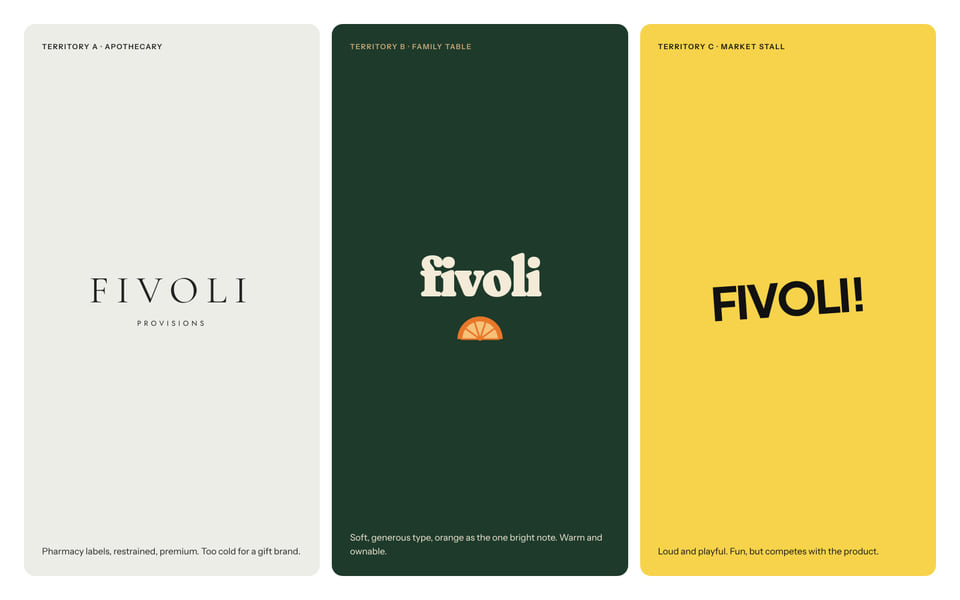
Related work.
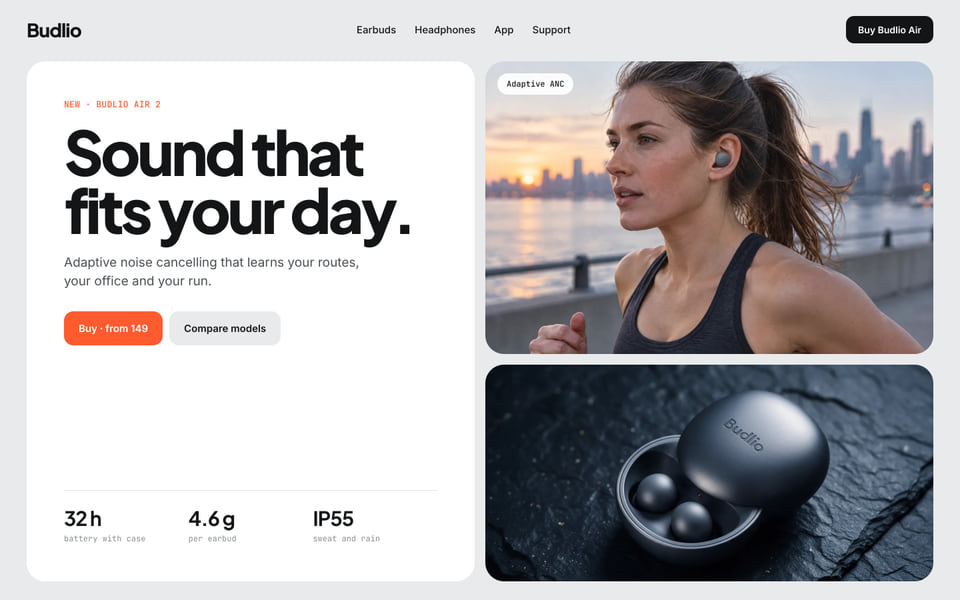
Self-initiated studio concepts, each with its identity, applications and website.

Common questions
About b2b branding
What is B2B branding?
It is the identity, message and materials of a company that sells to other businesses. Because several people usually weigh in on a purchase, the brand has to answer each of them, often in documents passed around without you.
How is B2B branding different from consumer branding?
The craft is the same; the reading is different. More people read the brand per purchase, they read it more closely, and much of that reading happens in PDFs, decks and product pages rather than ads.
Does a B2B company really need a strong visual identity?
It needs a clear and consistent one. When a buyer forwards your proposal to a colleague who has never heard of you, the document has to look like it comes from a company that is organized.
Have you worked in our sector?
Our studio work is in consumer and e-commerce brands, and we do not claim sector experience we do not have. What carries over is the method: mapping who reads the brand and building the pieces they read.
Can you design our website as well?
Yes. The page map comes out of the buying committee map, and the site is designed in the new identity.
Can you work with the logo we already have?
Yes. If the mark is sound, the work can focus on the system, the templates and the site around it. That is decided in the first conversation.
Who from our side should take part?
Someone who sells, someone who knows the product in detail, and the person who will approve the brand. The committee map is much better with a salesperson in the room.
Also as one project
Brand guidelines, planned with this one.
Brand guidelines are the document that tells your team, your freelancers and your store builder how the brand looks and sounds, with right and wrong examples side by side. We write and design them in the format your brand actually needs: a short style guide, a full brand book or a kit of ready templates.
Tell us who buys from you.
A short request, a call to sketch your buying committee, then a proposal with scope and schedule in writing.
Scope and schedule in writing before design starts.
- 01You tell us about the project in a short request.
- 02A short call to agree what the project needs.
- 03A proposal with scope and schedule in writing.