Branding for startups
Startup branding, built one milestone at a time
Startup branding works best when it grows with the company. We build what a consumer or e-commerce startup needs for its next milestone: a name, a mark and a launch kit before you sell, a sharper system once customers arrive, and guidelines ready for a funding round or a bigger team. The rest waits, on purpose.
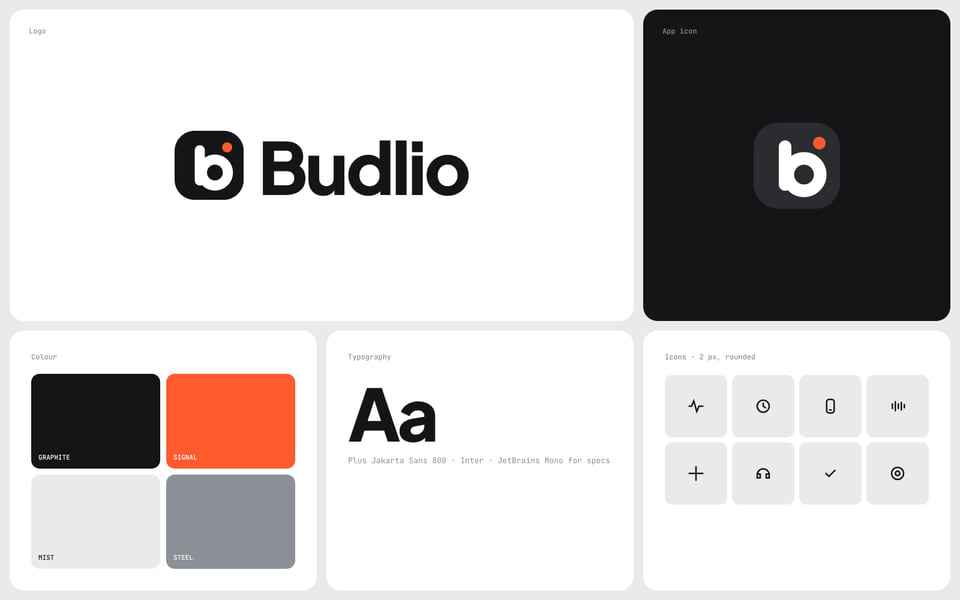
What the branding for startups project covers.
Agreed in writing before design starts, so you know what is in the project and what is not.
- A milestone brief
One working session that places the company at a milestone and lists what the brand has to do before it reaches the next one.
- Naming, or a check of the working name
If the name is still open, name routes with notes on meaning and tone. If you already have one, a plain check of how it reads, sounds and spells before it goes on anything public.
- Mark and wordmark, small size first
An early brand is mostly seen as an avatar, an app icon or a favicon, so the mark is drawn to hold at those sizes before it is enlarged.
- A launch kit
Only the pieces the first launch touches: a landing page or first product page, social templates, and a label or pack when there is a physical product.
- A small system that can grow
Two typefaces with clear roles, a short palette and a few layout rules, built so later pieces can be added without redrawing the base.
- The build-later list
A written list of everything we chose not to make yet, with the signal that tells you it is time to make it.
How do you brand a startup without building everything at once?
A plan by milestone: what to build now, what to postpone, and the five decisions that are expensive to change later.
What is a milestone brand plan?
It is a short plan that ties each piece of the brand to the moment the company actually needs it. Instead of one large identity project, the startup builds a strong base before launch and adds pieces as customers, partners and new people arrive.
We use three milestones: before launch, first customers, and a funding round or a growth step. The milestone is defined by who has to believe the brand next, not by the calendar. A startup selling on its own site and one about to pitch a retailer can be the same age and sit at different milestones.
The table below is the working version of the plan. It names what to build, what to postpone, and the signal that says the next milestone has arrived. It holds no durations on purpose: the signal matters more than the date.
| Milestone | Who has to believe the brand | Build now | Postpone | Signal to move to the next milestone |
|---|---|---|---|---|
| Before launch | The first buyers | Checked name, mark that reads at icon size, two typefaces, short palette, one-sentence promise, first product page or landing, launch templates | Full guidelines, campaign look, illustration style, sub-brand rules, motion | Orders start arriving from people you do not know |
| First customers | Repeat buyers and early partners | Voice rules, templates for what you post most, packaging insert or first-order email, palette tuned to product photos, a store that grows past one page | Deck template, product range system, full guidelines | Someone outside the founding team starts making things in the brand's name, or an investor or retailer asks for material |
| Funding round or growth step | Investors, retail buyers, new hires | Full brand guidelines, deck template, product range and naming rules, a shelf or retail version when it applies | Anything the growth plan does not yet call for | The next plan: a new market, a new line or a rebrand question |
Before launch: what has to exist on day one?
Only the pieces a first customer will touch, made well. That means a name you have checked, a mark that reads at icon size, two typefaces with clear jobs, a short palette, and a first page where someone can understand and buy the product.
This is also the moment to write the one sentence that says what the product does and for whom. Our brand messaging framework guide shows how to build that sentence and the few lines that support it. Everything else, from a full pattern library to a campaign look, can wait until there is a reason for it.
If the name is still open, the brand naming service runs routes and checks before any drawing starts. If it is settled, the work moves straight to the mark.
First customers: what changes once people are buying?
Real use shows which parts of the brand carry weight. Once orders come in, you can see which photos customers react to, which words they repeat back, and which formats you keep making by hand.
At this milestone we sharpen rather than add: tighten the palette where it looks muddy in product photos, give the voice a few written rules, turn repeated posts into templates, and design the packaging insert or the email that every new customer sees. The brand color palette guide covers how to test colors against real product shots.
It is also when the shop usually outgrows its first page. The ecommerce website design service plans the full store around how customers already shop.
Funding round or growth: what does a bigger audience need to see?
A brand that other people can use without asking the founders. Investors, retail buyers and new hires read the brand as a sign of how organized the company is, so the system has to look consistent in a deck, on a shelf and in a job post.
This is the milestone for full brand guidelines, a deck template, a product range system if the line is growing, and a clear rule for how sub-brands or new products are named. The base built before launch stays; it gets documented and extended.
Which five decisions should a startup not leave for later?
Five choices are cheap to make early and costly to change once the brand is public. We settle them in writing before anything is built.
1. The name. It ends up on the domain, the pack, the app store listing and every invoice. Check it aloud, in writing and in a search before it goes anywhere. Our guide on how to name a brand walks through the checks.
2. The promise in one sentence. What the product does and for whom. Every later piece of copy borrows from it, so a vague first version spreads.
3. The mark's shape at small size. If it does not read as an avatar or an app icon, it will be redrawn the first time someone needs one, and the brand starts to drift.
4. Two typefaces and their jobs. One for headlines, one for text. Swapping type later means re-setting every page, label and template made so far.
5. Who the brand talks to first. Not a full persona deck, just the first buyer named clearly. It decides the tone, the photos and where the launch kit appears.
Hypothetical example: a snack startup heading for launch
Hypothetical example. A two-founder company is about to sell a roasted chickpea snack through its own online shop. They have a working name, a pitch deck made from a template and no packaging yet.
In the milestone brief they are placed before launch. The five decisions get settled: the working name passes its checks, the promise is written as one sentence about a savory snack with short ingredients, the mark is drawn to read on a small pouch and as a shop avatar, and two typefaces are chosen.
The launch kit is the pouch front, the product page and three social templates. The build-later list holds a flavor color system (trigger: a third flavor), a retail shelf display (trigger: the first conversation with a store) and full guidelines (trigger: the first outside designer). Nothing on that list is made before its trigger.
What if the brand already exists but was made in a hurry?
Then we start by checking it against the five decisions. Often the name and the idea are sound and only the execution needs work, which is a refresh. When the name or the audience has changed, the rebranding service is the better fit, and the guide on whether to refresh or rebuild helps decide.
What you receive at the end.
What you receive at the end of the project.
- Logo and wordmark files for screen and print, in every color version
- Color values for screen, print and pack
- Typeface choices, each with its role
- Launch kit files, ready to use
- A one-page brand sheet that grows into full guidelines later
- The build-later list, with the trigger for each item
How the project runs.
Four steps, each with something you can approve before the next one starts. The schedule for each is written into the proposal.
Place the milestone
Where the company is now, what the next milestone asks of the brand, and who has to believe it: first buyers, a retailer, an investor or new hires.
A one-page milestone brief.
Settle the five decisions
Name, promise, mark, core palette and type, voice basics. These are the choices that cost the most to change later, so they are agreed in writing first.
The five decisions, written down.
Build for this milestone
The mark, the small system and the launch kit, tested on the formats the startup will actually use this quarter.
The brand and launch kit, applied.
Hand over with a map
Final files, the brand sheet and the build-later list, walked through with whoever posts, designs or codes next.
Files, brand sheet and build-later list.
Decided early, built to last past launch.
Name and type are settled first because they are the hardest to change once a brand is public.
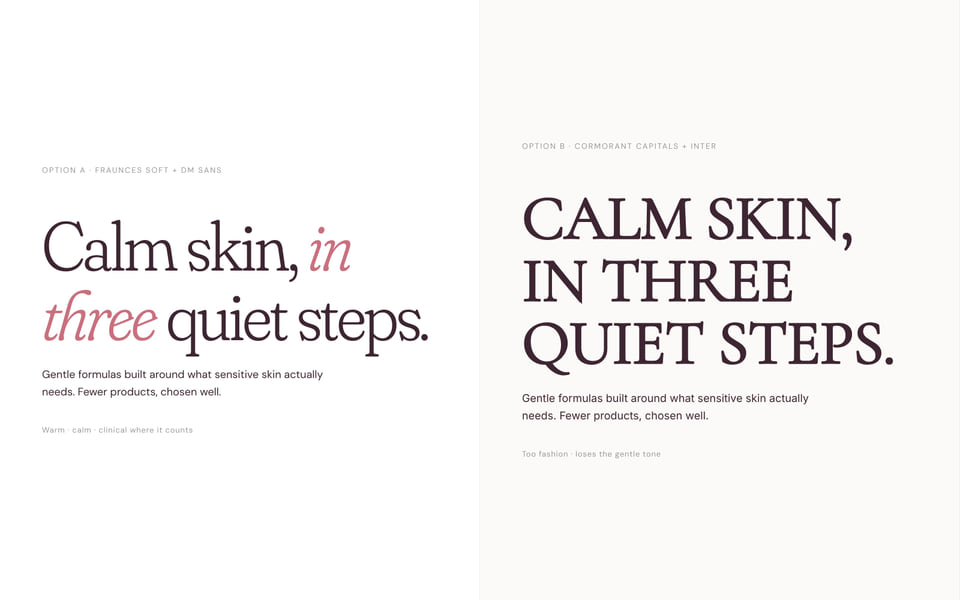
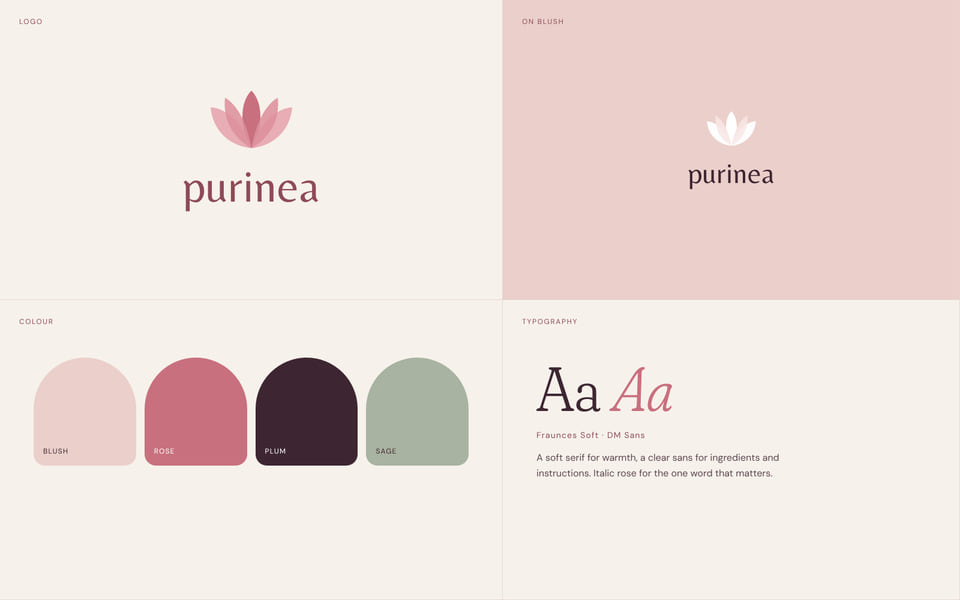
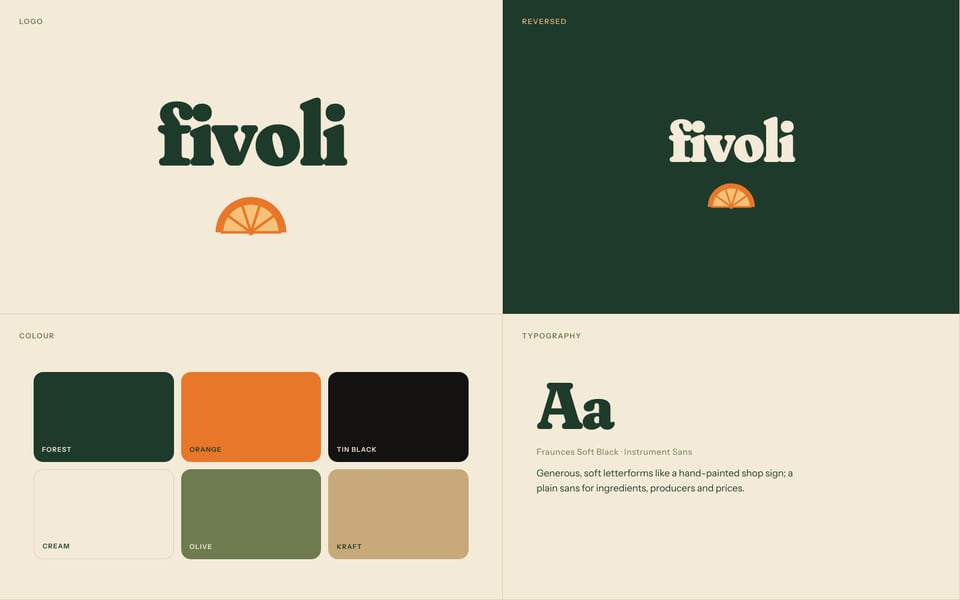
Related work.
Self-initiated studio concepts, each with its identity, applications and website.
Common questions
About branding for startups
What is startup branding?
It is the name, mark, voice and visual system of a young company, built in the order the company needs them. The point is to look and sound clear from the first sale without spending effort on pieces nobody will see yet.
When should a startup start on its brand?
Before the name goes on anything public: a domain, a pack, a pitch deck, an app store listing. Changing a name and mark after people have seen them takes more work than settling them first.
Do we need full brand guidelines at launch?
Usually not. A one-page brand sheet covers the first months; full guidelines make sense when more people start making things in the brand's name.
Can we keep the working name we already use?
Often, yes. The name step checks how it reads, sounds and spells, and only proposes routes if the working name causes real problems.
What happens to the brand if we pivot?
A small system bends more easily than a large one, which is one reason we keep it small. If the pivot changes who the brand is for, the build-later list and a refresh usually cover it; a full rebrand is the exception.
Can you design the website too?
Yes. It can be a single landing page for launch or a full online store, designed in the identity once it exists.
Which startups is this for?
Consumer and e-commerce startups: products people buy for themselves, in a shop or online.
How long does it take?
The schedule is written into the proposal before anything starts, and it follows the milestone you are heading for.
Also as one project
Brand guidelines, planned with this one.
Brand guidelines are the document that tells your team, your freelancers and your store builder how the brand looks and sounds, with right and wrong examples side by side. We write and design them in the format your brand actually needs: a short style guide, a full brand book or a kit of ready templates.
Tell us which milestone you are heading for.
A short request, a call to place the milestone, then a proposal with scope and schedule in writing.
Scope and schedule in writing before design starts.
- 01You tell us about the project in a short request.
- 02A short call to agree what the project needs.
- 03A proposal with scope and schedule in writing.