Fashion branding
Fashion branding that outlasts the season
Fashion branding is the identity of a label and the rules that keep it recognizable while every collection changes. We build it from the garment outward: neck label, hang tag, mailer, product page, lookbook. Each piece is marked permanent or seasonal, so a new drop can look new without looking like a different brand.
What the fashion branding project covers.
Agreed in writing before design starts, so you know what is in the project and what is not.
- A garment-out stack
Every branded piece, from the one sewn into the garment to the campaign image, listed in order and marked permanent or seasonal.
- A wordmark that survives being woven
Drawn to hold up at the size and coarse resolution of a woven or printed neck label, and still carry a lookbook cover.
- Trims and hang tags as one system
Neck label, care label, hang tag and any patch or zipper pull, specified so the factory can reproduce them run after run.
- The box that arrives at home
Mailer, tissue, sticker and insert card designed for the moment the order is opened.
- A seasonal layer with limits
A short list of what each collection may change, such as a campaign color, a photo treatment or a display typeface, and what it may never touch.
- Product pages that show the fabric
Brand rules for the online store: photo order, fit and fabric copy, and how product names and color names are set.
How we brand a fashion label: the garment-out stack
A working sheet for any label, filled in with us or on your own.
Why does a consumer brand studio fit fashion?
Clothing is sold the way the brands we already work on are sold: a product page, a parcel, a first impression in the hand. Our brand identity work starts from those moments, and so does this method.
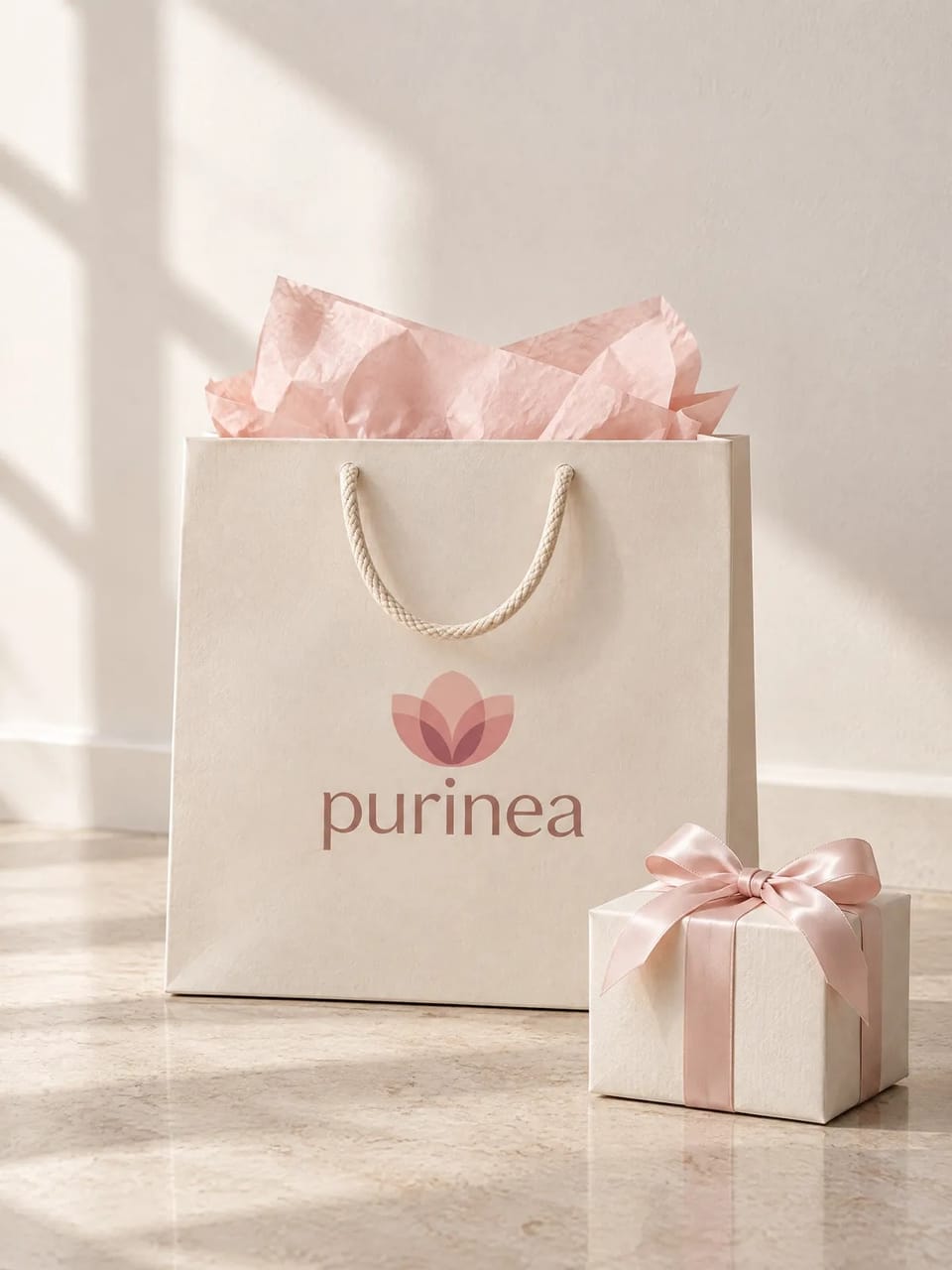
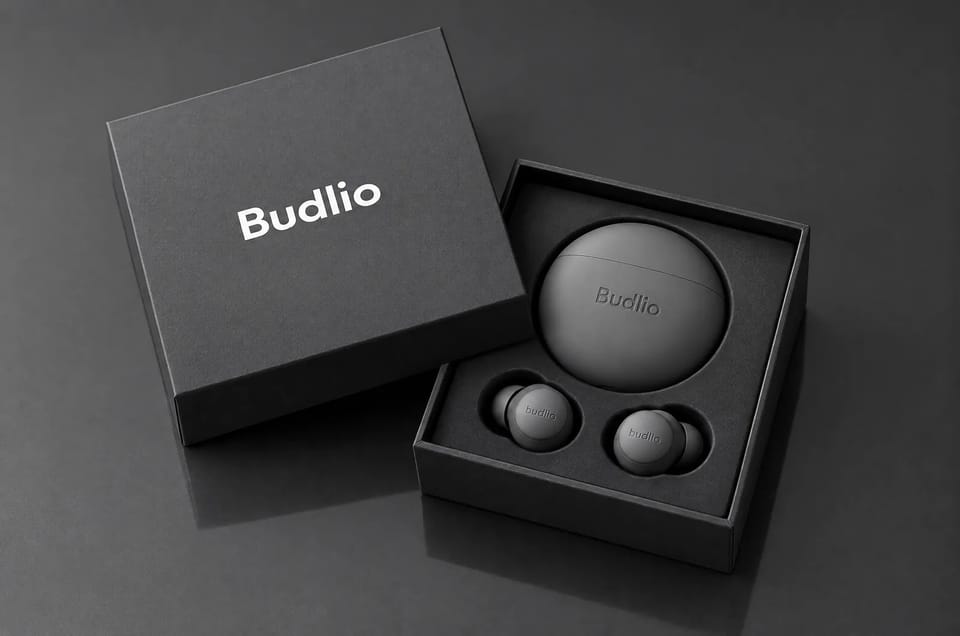
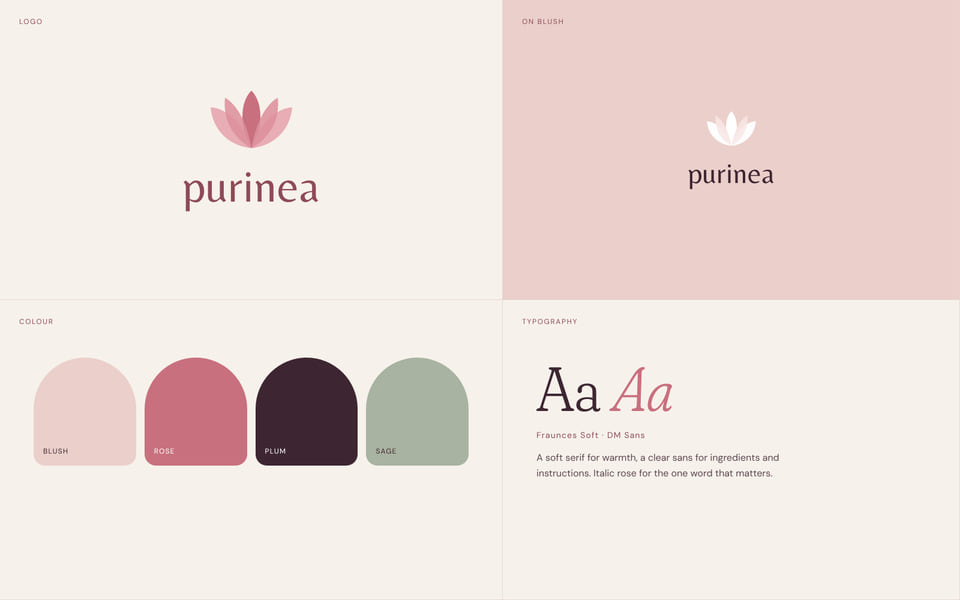
To be clear: Brandtune has no fashion clients to show. The images here are studio concepts from skincare and audio, and the label further down is a hypothetical example. What carries over is the method.
Start at the garment, not the mood board
Most fashion branding advice begins with a feeling and a campaign. We begin with the label sewn into the neck, because it stays with the product for years and is often the last thing anyone designs.
From there the stack moves outward: care label, hang tag, mailer, product page, lookbook, campaign. Each layer sits further from the body and is easier to change. That ordering is the whole idea. The closer a piece sits to the garment, the more permanent it should be.
Permanent or seasonal: the one decision that holds a label together
A collection is supposed to look new. A label is supposed to look like itself. The stack settles that tension by giving every piece one of two status words, and the table below shows the split we start from.
Permanent pieces carry the core: the wordmark, one type pairing, one or two colors, the layout of labels and tags. Seasonal pieces carry the collection: campaign color, photo treatment, a display typeface for the lookbook. When a season wants to touch a permanent piece, that is a brand audit question, not a design tweak.
| Layer | Piece | Where the customer meets it | Permanent or seasonal | What the rule protects |
|---|---|---|---|---|
| On the garment | Neck label | Inside the collar, for the life of the garment | Permanent | The wordmark at its smallest |
| On the garment | Care label | Read once, at the first wash | Permanent | Layout and type around the care information your team supplies |
| On the garment | Hang tag | In the parcel or on the rail, before the first wear | Split: fixed front, seasonal back | Recognition, plus the collection name |
| In the parcel | Mailer, tissue, sticker | On the doorstep and on the table | Permanent | The order of opening and the brand color |
| In the parcel | Insert card | Read while trying the garment on | Seasonal text, permanent layout | The voice on fit, fabric and care |
| On screen | Product page | Comparing fit, color and fabric | Permanent rules, seasonal images | Photo order, product and color naming |
| Campaign | Lookbook | Browsing the whole collection | Seasonal, within limits | Grid and wordmark position stay; the mood changes |
| Campaign | Campaign images | Billboard, ad or press page | Seasonal | Wordmark position and minimum size |
Small sizes decide the wordmark
A fashion wordmark lives at two extremes. It is woven into a label barely wider than a thumb, and it runs large across a lookbook cover or a store sign. Hairlines that look elegant on screen tend to fill in when woven.
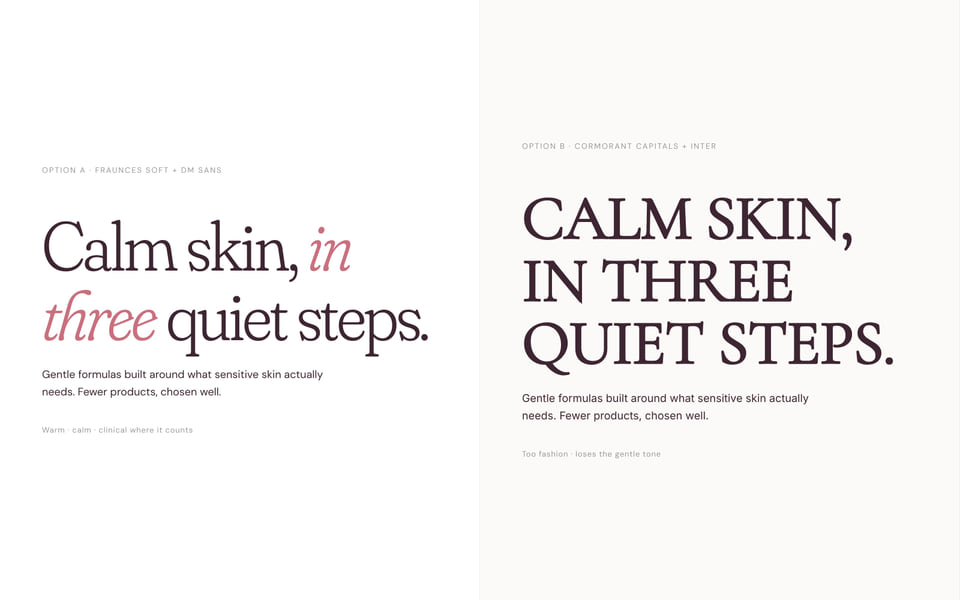
So we proof the mark small first, in the coarse grid of a woven label and in one color on a care label, before we judge it large. Type carries category signals as well: in our Purinea concept a route in serif capitals was dropped because it read as fashion rather than skincare. For a label, that same signal can be the point. Our guide to brand fonts explains how we choose a pairing.
The parcel is the shop window now
For a label that sells online, the first physical contact is a mailer on a doorstep. Tissue, a sticker, an insert card and the fold of the garment do the work of a store window. We design that opening sequence with the same rules we use in packaging design for a product range: one front, a clear order of opening, nothing that ends up in the trash in irritation.
The insert card is also where the label speaks in words, so we write a short voice note alongside the visual system, following our brand voice guidelines: how the label describes fit, fabric and care, in sentences your team can reuse every season.
Fill in the stack for your own label
- Piece (for example: neck label, care label, hang tag, mailer, insert card, product page, lookbook): ______
- Where the customer meets it, and at what distance: ______
- Permanent or seasonal: ______
- What it must always show (wordmark, color, layout): ______
- What a season may change on it: ______
- Who produces it (factory, packaging supplier, your studio, the photographer): ______
- Lead time before a drop, from your own production calendar: ______
Hypothetical example: an outerwear label with two drops a year
Hypothetical example. Picture a small independent label making jackets and knitwear, sold mainly through its own online store, with an autumn drop and a spring drop. Its stack shows a familiar pattern: the factory set up the neck label, the hang tag changes every season and the mailer is plain stock. The permanent pieces are the ones nobody designed.
The decisions follow from that. The wordmark is redrawn so it survives weaving. Neck label, care label and mailer become permanent and identical across drops. The hang tag splits in two: a fixed front with the wordmark and a seasonal back with the collection name. Autumn and spring then differ in campaign color and photography only, written into a brand kit the team opens before every shoot.
Where strategy and naming come in
The stack assumes you know who the label is for and what it stands for. If that is still open, we start with brand strategy. If the label has no name yet, we start with brand naming. For a label already trading, the filled-in stack shows which pieces have drifted before anyone decides on a refresh.
What you receive at the end.
What you receive at the end of the project.
- The garment-out stack, as a sheet your team updates every season
- Logo files for woven labels, print, embroidery and screen
- Trim specifications for the factory: neck labels, care labels and hang tags
- Packaging artwork for mailers, tissue and insert cards
- Season templates for lookbook and campaign layouts
- Brand guidelines with a separate seasonal chapter
How the project runs.
Four steps, each with something you can approve before the next one starts. The schedule for each is written into the proposal.
Lay out what the customer touches
We collect every branded piece you have or plan, from the garment outward, and pin them to one board at real size.
A first garment-out stack.
Split permanent from seasonal
Together we decide which pieces never change between collections and which ones are allowed to carry the season.
A marked stack and the seasonal limits, in writing.
Design the core, then one season on top
Wordmark, type, color and trims are designed and proofed small first; then a sample season is built over them to prove the core can take it.
The identity plus one worked seasonal layer.
Hand it to the factory and the studio
Trim specs for the manufacturer, packaging files for the supplier and templates your team reuses for every drop.
Files, specs, templates and a walkthrough.
Branded objects from other categories.
We have no fashion work to show. These studio concepts come from skincare and audio and answer the question a parcel asks on the doorstep: does it feel like the brand before anything is unwrapped?
Related work.
Self-initiated studio concepts, each with its identity, applications and website.
Common questions
About fashion branding
Have you branded a fashion label before?
No. The Brandtune studio works on consumer and e-commerce brands, and we have no fashion client work published. This page sets out the method we would use, and every example on it is a studio concept or a hypothetical example.
What is fashion branding?
It is the identity of a label and the rules for how it appears wherever a customer meets it: on the garment, in the parcel, in the online store and in campaigns. Collections change; the branding is what keeps them recognizably from the same house.
How do we stay consistent when every collection looks different?
By deciding in advance what is permanent and what is seasonal. The wordmark, labels and packaging stay put, while campaign color, photography and lookbook layout move within written limits.
Do you design the labels and trims, or only the logo?
Both. We lay out neck labels, care labels and hang tags so a manufacturer can produce them; the care information itself, the materials and the production stay with your team and your factory.
Can you name a new label?
Yes, as a separate naming step. For fashion we also check how each candidate looks woven at label size and how it sounds said aloud in a store.
Do you design the online store?
The identity is designed to work on product pages, and we write the brand rules for them. Building the store is scoped separately, as e-commerce website design.
What do you need from us to start?
Your current labels and packaging, a few garments if you can send them, the last lookbook or campaign and your plan for the next collections.
Also as one project
Brand identity, planned with this one.
Brand identity design gives a consumer brand a name, a mark and a visual system it can put on a pack, a shelf, a campaign and a product page without losing its voice. We build it in three layers, a base system, its applications and a living system, and you make six decisions along the way, each one in writing.
Tell us about the label and the next collection.
A short request, a call about your garments and your production calendar, then a written proposal with scope and schedule.
Scope and schedule in writing before design starts.
- 01You tell us about the project in a short request.
- 02A short call to agree what the project needs.
- 03A proposal with scope and schedule in writing.